Chrome Badge Printing
In this article
Vizito prints a visitor badge automatically as soon as somebody signs in at the kiosk. This guide sets that up on a browser-based kiosk or touchscreen pc: switch badge printing on in the backoffice, link the pc to your Vizito account, and let Chrome print without asking.
The screenshots use a Brother QL-820NWB label printer and a device running Windows 11. For everything Vizito prints to, see our compatible label printers list.
Prerequisites: connect your printer to the WiFi network and install the printer driver on the pc that runs the kiosk (Brother printer drivers).
Enable badge printing in the backoffice
-
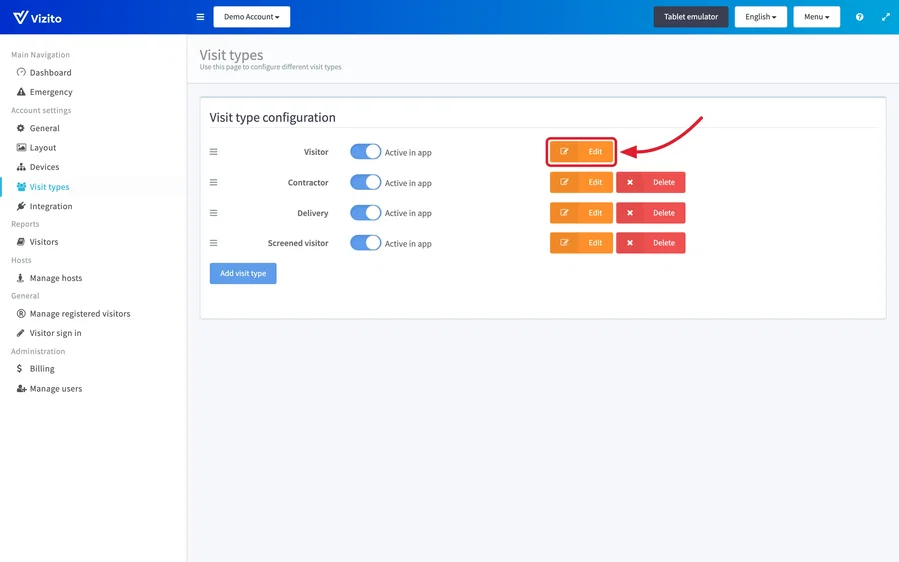
Go to the Vizito backoffice and select “Account settings” > “Visit types” in the left menu.
-
Click “Edit” next to the visit type you want to print badges for.
-
Open the “Badge” tab and look at “Badge template”. A visit type that has a badge shows it as a card with a preview and the badge’s name. If the tab says “No badge for this visit type yet”, give the visit type a badge first, as described in Badge designer. Until it has one, the two switches under “Printing” stay locked and show “Requires a badge template.”
-
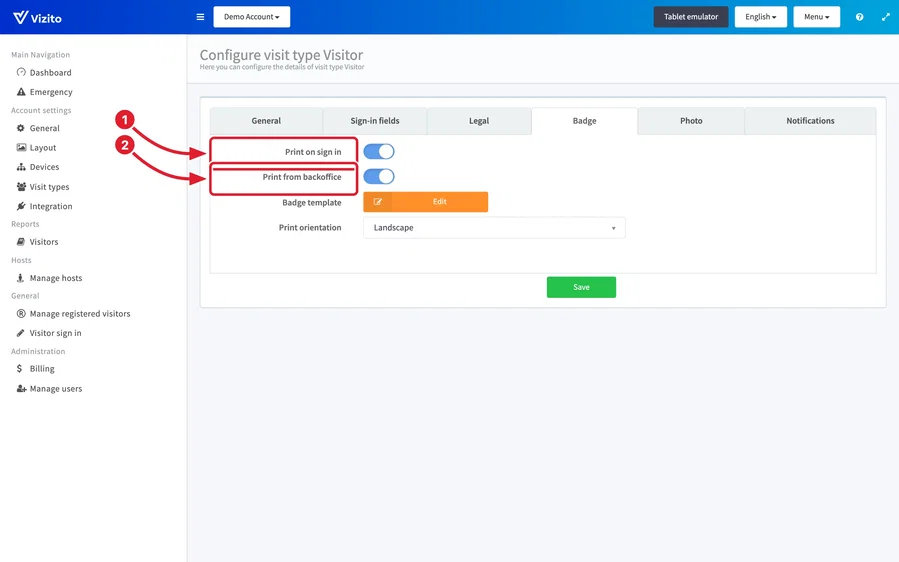
Under “Printing”, turn on “Print on sign in”, “Print from backoffice” or both.
-
Print on sign in prints a badge automatically as soon as a visitor finishes signing in on the kiosk.
-
Print from backoffice lets you print and reprint badges yourself. You need this when you sign visitors in through Visitor sign in.
-
-
Under “Printer”, set “Print orientation” to “Landscape” or “Portrait” to match the way your labels come out of the printer. For a designed badge the orientation is part of the design, so the tab only shows it.
-
Click “Save” at the bottom of the “Badge” tab. The print switches only take effect once you save.
To change the badge, save the tab first so you do not lose print switches you have just turned on, then click “Edit” under the card. The “Type” line on the card tells you what opens: an “HTML template” opens in the HTML editor, a “Designed badge” opens in the badge designer.
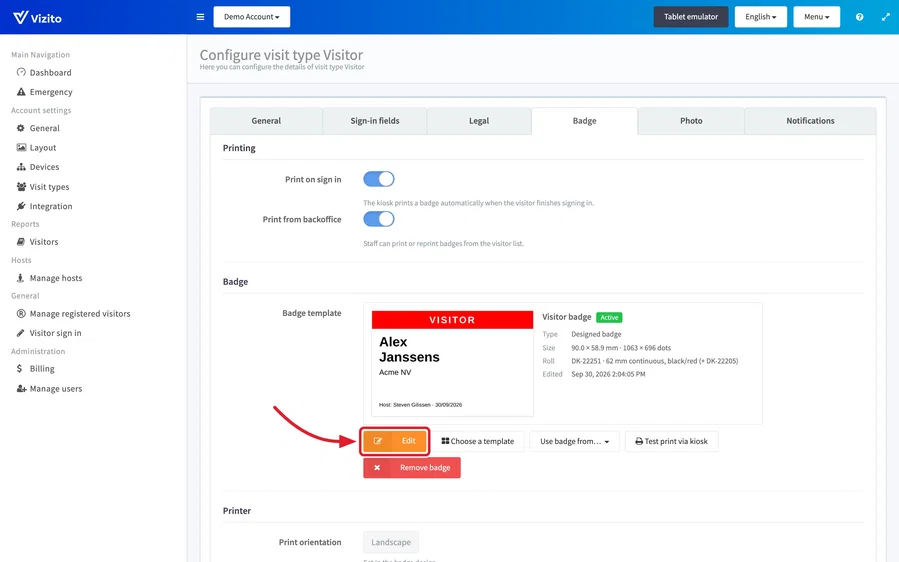
In the HTML editor, click “Save” to keep your changes. “Close” leaves the editor without saving them. Badge designer covers the designer and, in its last section, the HTML editor.
Print setup
-
Install Google Chrome on the kiosk pc. If you do not have it yet, download it from the Google Chrome website.
-
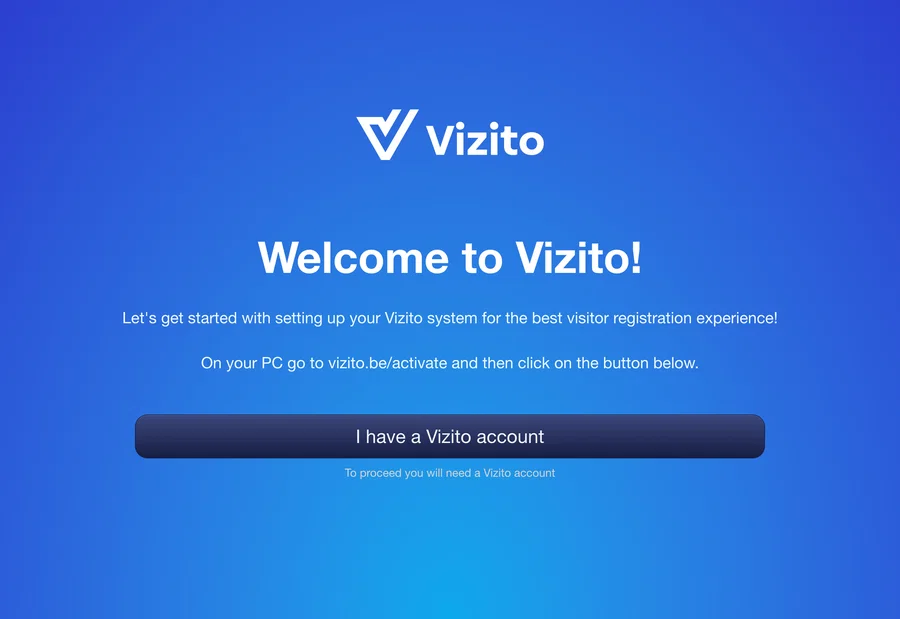
Open the Vizito frontoffice in Chrome on that pc and click on “I have a Vizito account”.
-
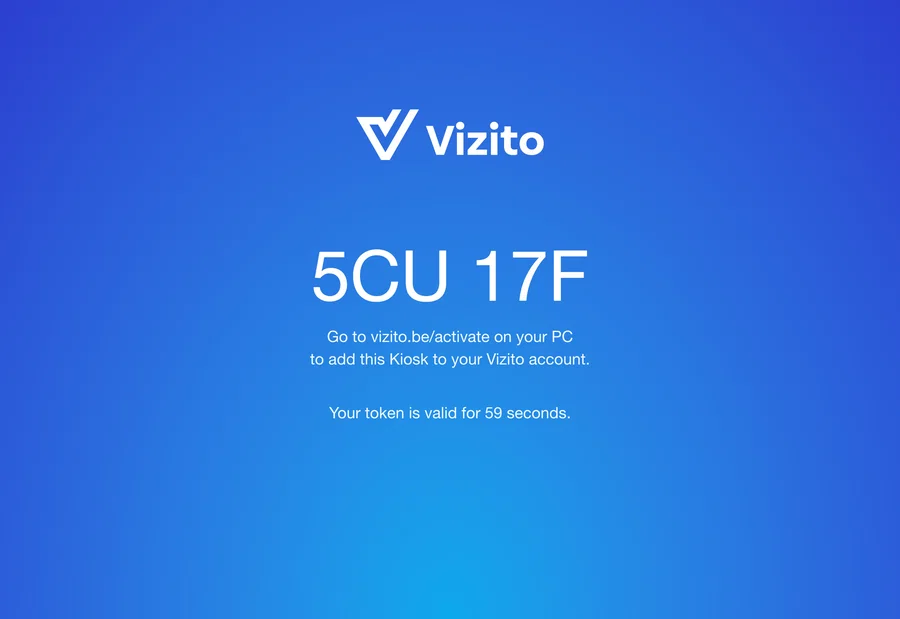
Note the device token (XXX XXX) the kiosk shows. It is six characters long.
-
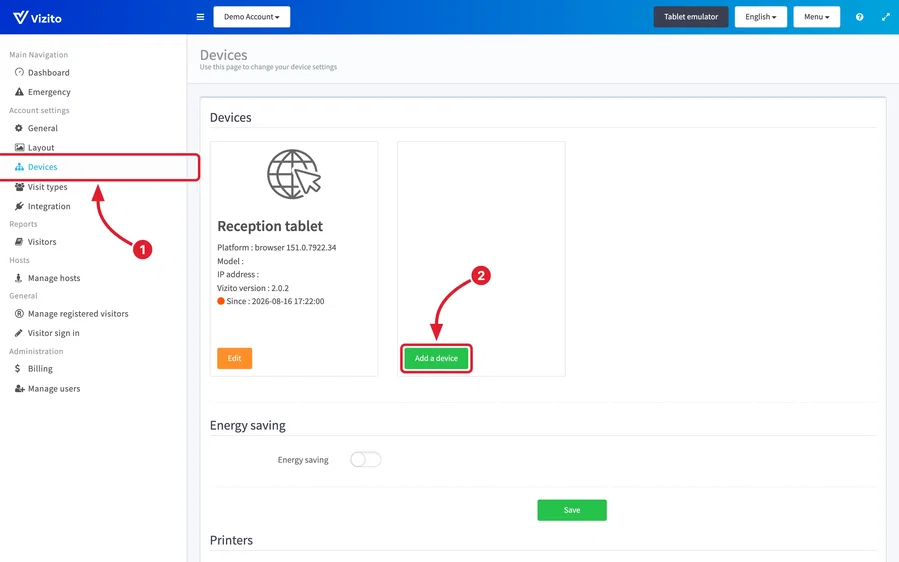
In the backoffice, select “Account settings” > “Devices” in the left menu and click “Add a device”.
-
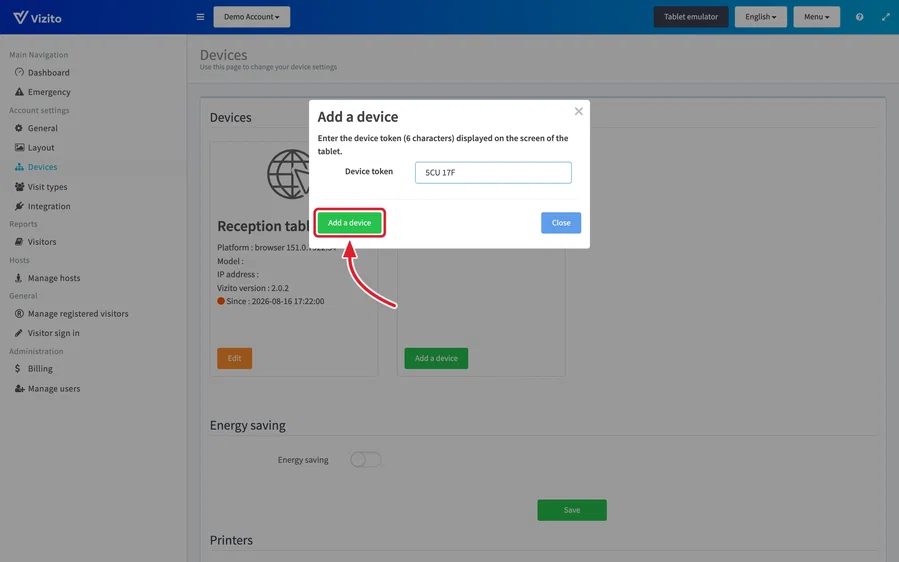
Enter the device token in the dialog, then click the green “Add a device” button to link the kiosk to your account.
-
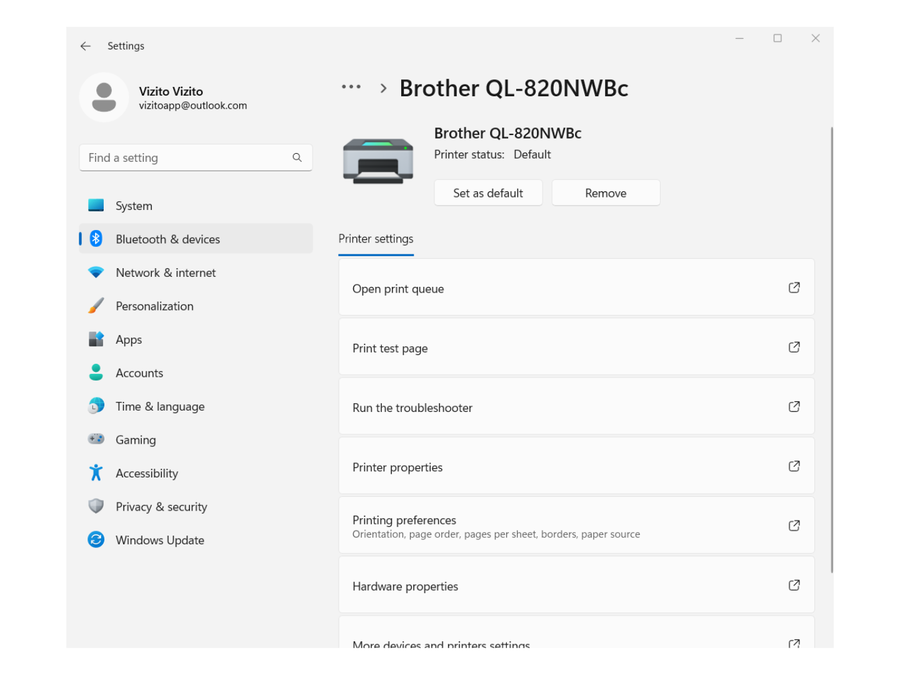
Set your label printer as the default printer on the kiosk pc. In Windows 11 this is under Settings > Bluetooth & devices > select the printer > “Set as default”.
-
Sign in as a test visitor to check that the printer works.
-
Adjust the print settings in the dialog that pops up so the badge prints the way you want. Depending on your printer and label size this can take some trial and error, either here or in the badge template. See HTML editor for the template and label size settings.
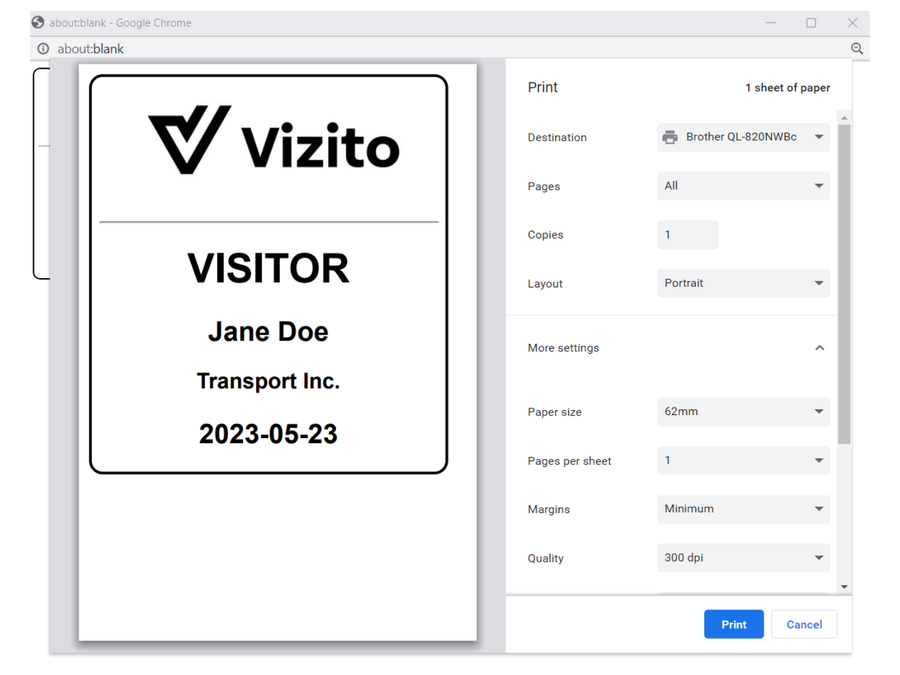
*If the printer reports “Label roll is incorrect”, change the label roll setting in the printer properties on the pc.
Note: the backoffice tracks printer state under “Printers” at the bottom of the Devices page. That section covers printers selected in the Vizito app on a tablet. A browser kiosk prints through Chrome, so it uses the default printer you set on the pc.
Enabling kiosk mode
-
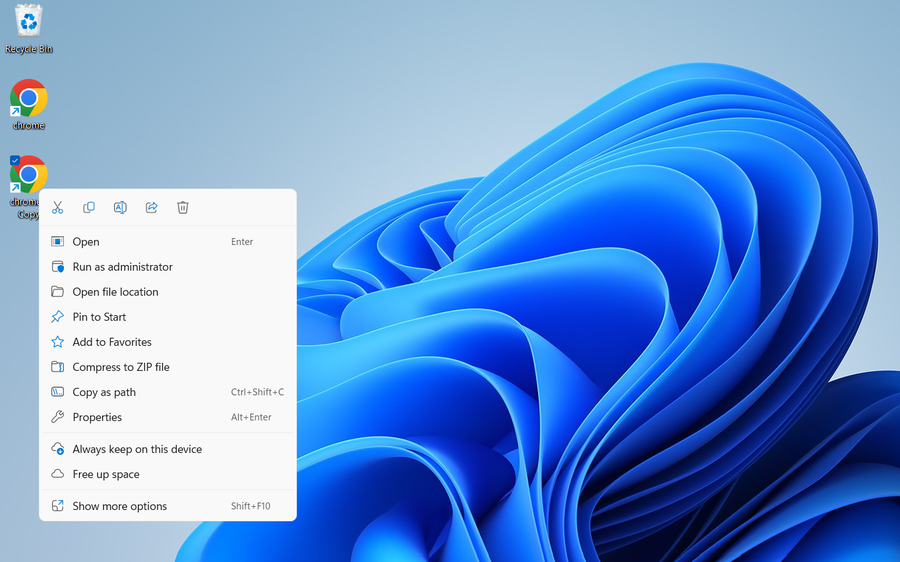
Create a copy of the Chrome shortcut on your desktop.
-
Right-click the copied shortcut and click on “Properties”.
-
In the Target field, add the following text to the end, after a space:
--kiosk-printing --kiosk "https://frontoffice.vizito.be/".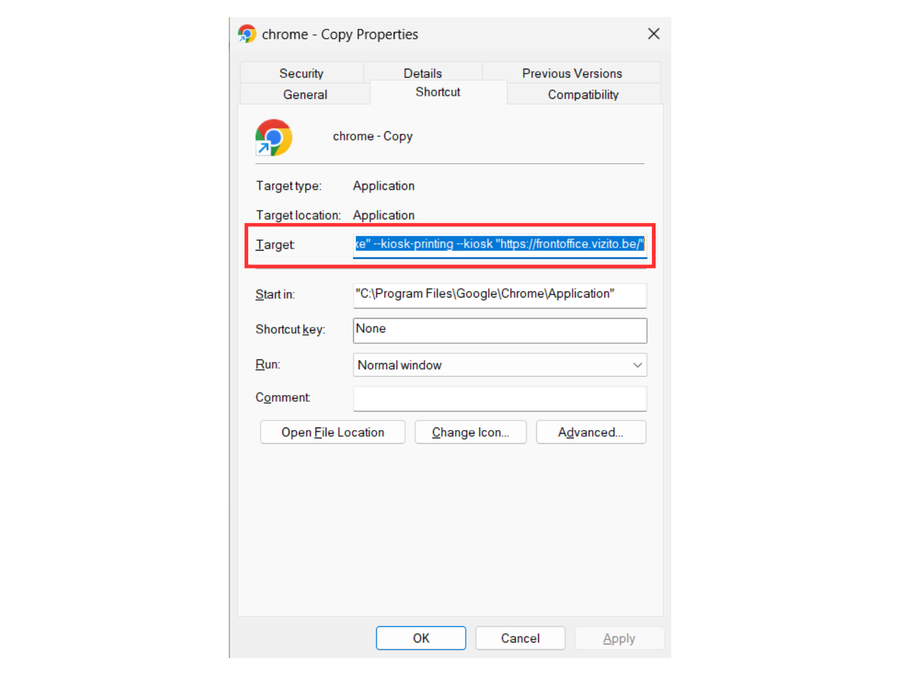
-
Optionally, rename your shortcut in the “General” tab and select a different icon in the “Shortcut” tab using the “Change Icon” button.
Background printing without full kiosk mode
If you would rather not be locked into kiosk mode, and want to toggle full-screen with the F11 key instead, follow the same steps but leave --kiosk out of the Target field in step 3. Use only --kiosk-printing. Chrome then prints badges in the background without forcing full-screen.