Oct 15, 2026
Who Is on Site Right Now? An HSE Manager’s Guide to On-Site Visibility
The role of the receptionist is evolving with the modern workplace. In this article, you’ll learn which 12 qualities are essential for a good receptionist in 2026, how new trends are changing the job, and how to take your skills to the next level to make your resume stand out.

The 12 most important skills every receptionist needs in 2026 are communication, multitasking, social skills, organization, technical skills, flexibility, stress resistance, problem solving, empathy, reliability, teamwork, and language skills. With AI agents and digital tools now handling routine tasks, the human touch at your company’s front desk is more valuable than ever for creating a strong first impression.
A receptionist is much more than someone who answers the phone or greets visitors. He or she is your company’s calling card. Here is a detailed breakdown of each skill.
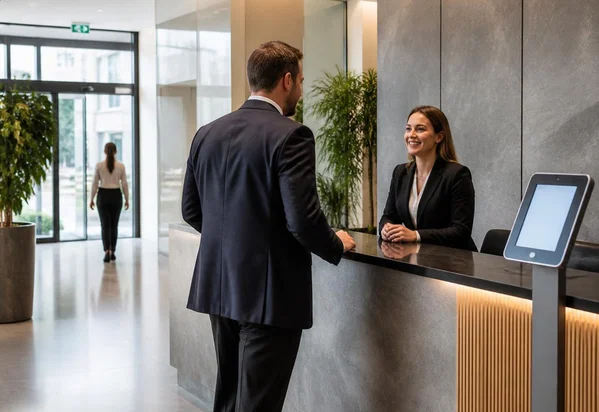
Your reception desk is the face of your business. By definition, the receptionist is the first person a visitor sees. It goes without saying that this first contact is extremely important: it determines the first impression people get of your company.
Naturally, this places a great deal of responsibility on your receptionist. If you are looking for staff to man your reception desk, look out for these skills and qualities. And if you are applying for a position as a receptionist or administrative assistant, make sure you excel in these 12 skills and put them on your resume.
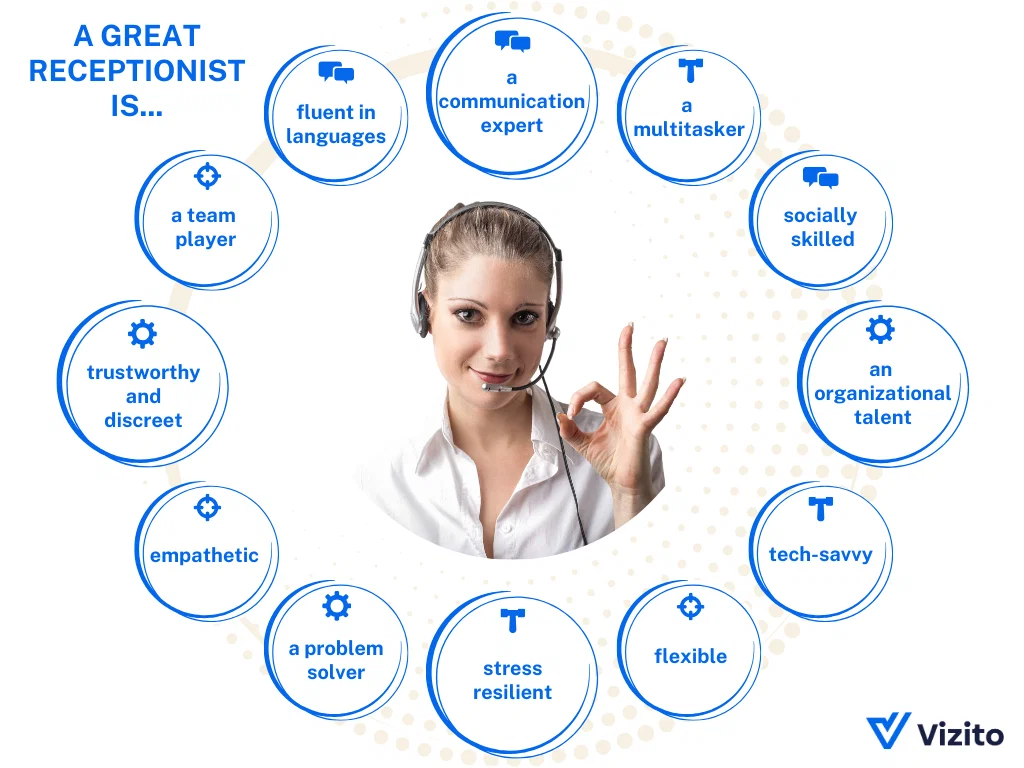
Receptionists are always in contact with people, whether by phone, email or in person. So good communication skills are at the top of the list of desirable qualities. Being able to convey information clearly, speak clearly and loudly enough and master the art of nonverbal communication are just some of the requirements.
On the busiest days, the phone at the front desk is ringing off the hook. Meanwhile, people may be waiting to be greeted personally. Appointments are to be made, messages to be passed on, and administrative tasks to be completed.
A receptionist is constantly juggling all kinds of tasks. It’s important they can switch between tasks smoothly, while taking into account everyone’s needs and not becoming overwhelmed or frustrated themselves. Multitasking and prioritizing skills also come hand in hand because it is important to know which tasks should take priority.
Needless to say, a receptionist must also possess considerable social skills to build relationships with customers, colleagues and visitors. A bad experience at the front desk can put your company in a negative light in an instant. Welcoming guests warmly and with a smile is a first core task.
Visitor management is therefore largely a responsibility of the receptionist. The latter must keep an eye on who enters the building to ensure security. Checking in guests and keeping track of their records is also among the duties.
Today, most companies use visitor registration software. By automating the registration of visitors and the management of their data, receptionists keep their hands free to ensure a warm welcome, guide visitors as needed and thus create a positive first impression.
Read how to get started with digital visitor registration in less than 30 minutes.
If you look around an office building, the reception is often the neatest place. And so it should be. A desk full of papers not only makes a bad impression on visitors, it’s also a harbinger of trouble: a document is quickly lost and data lying around violates data protection rules.
The perfect receptionist is therefore highly organized. Time management is also crucial here. Coordinating appointments, processing e-mails, answering phones and welcoming visitors: in the hustle and bustle of a corporate reception, being able to prioritize and work efficiently within tight deadlines is a must.
Complicated phone systems, email, word processing programs and photocopiers have long since held no secrets for most receptionists. But in a world where everyone is going digital, keeping up with the latest technologies is a great asset. Modern receptionists work with systems for room management, smart parking and visitor registration.
In addition, AI is starting to play a role in the reception process. Robots that welcome visitors are still rare, but you may have already been introduced to automated chatbots for initial customer contacts. Technologies such as AI-driven calendar management and voice recognition for more efficient communication are also becoming more common. A receptionist who understands and can work with these technologies has a big head start. In many organizations these tools now power a virtual front desk that handles self-service check-in when no one is at the desk.
What is digital visitor registration and how can it help your company? In this article we list 5 ways visitor management systems save time and improve efficiency.
This ever-evolving work environment, as mentioned, requires great adaptability. By being open to innovation and quickly mastering new tools, a receptionist remains indispensable in an increasingly digital business landscape.
Flexibility also means being able to deal with different types of people and situations. From an important customer demanding extra attention to a supplier with an urgent question, a receptionist must know how to find the right tone and respond professionally, regardless of the circumstances.
Receptionists must have nerves of steel. They often have to work under great pressure, as they have to handle several tasks and visitors at the same time. While doing their tasks they are often interrupted by people requesting information, by a phone call or by a new visitor, and then go back to their work. Yet they must remain calm and focused.
An unsatisfied customer, a missed appointment, a visitor who is unwell… Dozens of problems can arise every day. It is the receptionist’s job to remain calm and find a solution. In emergency situations, receptionists are also often the first people who have to react and decide what to do.
Every once in a while every organization faces the occasional visitor who is dissatisfied, stressed, or frustrated. In such situations, an empathetic receptionist is golden. By actively listening, remaining calm and taking the problem seriously, he or she can make a big difference in how the visitor perceives the experience.
Customer service is always paramount. Even in difficult conversations, it is important to show understanding, put the visitor at ease and maintain a professional, helpful attitude.
Reliability means being able to work independently, be punctual and take responsibility. Receptionists are an organization’s central point of contact and come into daily contact with both customers and employees. It is essential that they take their responsibilities seriously. No company can afford to have an important phone call go unanswered or a visitor waiting at an empty reception desk. A good receptionist ensures that everyone is helped quickly, appointments are followed up correctly and the daily operation of the front desk runs smoothly.
In addition, discretion and confidentiality are very important. Receptionists often have access to sensitive company information, customer data and internal communications. They must handle this carefully and be aware of the importance of privacy and data security.
As a receptionist, it is essential to communicate and work well with colleagues from different departments within the organization. Such cooperation ensures that daily operations run smoothly and that customers and visitors are served quickly and professionally.
Speaking multiple languages can be a great advantage - especially in an international environment. It enables a receptionist to welcome and assist visitors from different backgrounds, increasing customer satisfaction. Language proficiency makes communication easier and avoids misunderstandings, contributing to a professional image of the company.

In 2026, AI has moved well beyond simple chatbots. AI agents can now handle multi-step tasks autonomously - from pre-screening visitor appointments to generating daily reception reports. Visitor management systems increasingly use AI to recognize returning guests, predict busy periods and flag security concerns before they become problems. Staying current also means knowing the features every modern reception should have.
Yet this doesn’t diminish the receptionist’s role. As the World Economic Forum has highlighted, the more technology advances, the greater the demand for distinctly human skills. AI handles the routine; the receptionist provides the warmth, judgment and personal attention that no algorithm can replicate.
Curious about handy office management tools that can help receptionists? Then check out this blog post for the latest digital gadgets.
Hybrid working is no longer an experiment - it’s the standard for most organizations. Office design has evolved to support collaboration: flexible workstations, creative meeting rooms and quiet zones have replaced rows of fixed desks. With fluctuating daily occupancy, receptionists need to manage unpredictable visitor flows and coordinate with teams who may be partly remote on any given day.
This requires a blend of technical skills - mastering booking systems, digital signage and visitor management platforms - and the interpersonal agility to make every visitor feel welcome regardless of how busy or quiet the office is.
Want to read more about hybrid working? Check out our blog posts on the office of the future, benefits of working in the office and benefits of physical meetings.
With the EU’s NIS2 directive now in full effect and data protection regulations continuing to tighten, receptionists play a key role in organizational compliance. Visitor access control, proper data handling during check-in, and maintaining accurate visitor logs are no longer just best practices - they are legal requirements for many industries.
Receptionists who understand these obligations and can work confidently with digital visitor management systems help their organizations avoid fines and security breaches.
Sustainability remains a priority in 2026. Digital sign-in systems, paperless meetings and reusable materials at the reception desk are now standard in forward-thinking companies. Receptionists contribute directly to their organization’s ESG goals by helping to reduce waste and promote greener workplace practices.
In short, the role of the receptionist remains crucial, but continues to evolve. By combining AI-powered tools with human empathy and awareness of compliance requirements, receptionists are more indispensable than ever.
Merriam Webster describes a receptionist as follows:
re-cep-tion-ist,
a person employed to greet telephone callers, visitors, patients, or clients
A receptionist or front office clerk is someone who manages the reception desk of an organization. He or she welcomes visitors in a company, hotel or hospital and performs administrative duties.
The job of a receptionist is vital in an organization. By definition, the receptionist is the first person a visitor meets. It is his/her responsibility to provide top-notch customer service and make a good first impression. A receptionist is in other words the face of the company.
The role of the modern receptionist is expanding. The traditional receptionist duties are merging with other responsibilities. The tasks may vary by organization or industry. Here are the main duties that most receptionists have on a daily basis:
Receptionists have many responsibilities. Automating certain tasks frees up time for their most important job: giving visitors a warm welcome and ensuring an outstanding first impression.
One way to do this is to work with digital visitor registration. Visitors can check themselves in on a tablet and their host gets instantly notified, while the receptionist can focus on providing the perfect welcome. To find out how a visitor registration system can help your front desk, try Vizito for free during a 14 day trial.
For a deeper look at each task, see our companion guide on receptionist duties and responsibilities.

The job of receptionist does not require any specific education or training, although requirements may vary per company.
Education: Usually a high school diploma suffices, but some companies expect their receptionists to have a bachelor’s degree in communications or business management. Some industries - such as hospitals or the legal industry - may require additional diplomas.
Training: Receptionists are in most cases trained on-the-job. Training is focused on the needs of the sector or the company.
Experience: Knowledge of computer programs and software, such as Microsoft Office, comes in handy as these applications are used for many receptionist tasks. Knowledge of telephone systems is a plus. In addition, some companies have specific requirements based on their unique needs, such as experience with a specific software system.

Are you looking for a job as a receptionist? There are several things you can do to improve your skills to become a great receptionist.
As communication is key for a receptionist, it is important that you train your communication skills whenever possible. Practice your active listening skills on the telephone, paying attention to what the other person is saying and summarizing this information. You can also practice your communication during meetings with others.
Receptionists must maintain professionalism throughout the day. A good way to practice this is by communicating on the same professional level with everyone you meet. For example, greet the mailman with the same courtesy as an executive in your company.
When you take notes and document everything, you will be better organized and more focused on details.
Receptionists should always be at their desk to greet customers, answer phone calls and perform other tasks. Make reliability a priority by ensuring you are always available to help. Implementing digital visitor registration systems, allow visitors to check in when you are unavailable.
Workplaces constantly change and transform to accommodate the newest regulations and trends. These changes require receptionists to adapt to new modes of working, integrating digital tools with the physical presence to maintain a personal touch and connection.
To get a feel of how a modern visitor management system can help your business grow, try out Vizito during a 14-day trial or chat with us to discuss how Vizito can help you improve your reception.
 Hosted in Europe
 ISO 27001 Certified
 GDPR compliant
 249+ reviews
 No credit card required
Our chat could not load
A content blocker or privacy extension is blocking client.crisp.chat, the service that runs our chat. Allow that address and try again, or reach us another way.
Contact us instead