Oct 07, 2026
Moving away from SwipedOn? What the new Terms of Service mean and how to switch
In this article, we explain how to build a successful visitor management strategy. You will discover how digital check-in, clear access control, privacy protection, emergency procedures and a better visitor experience contribute to a safe and professional reception.
Written by Jill, Content Manager - Written: July 17, 2026 - Last updated: July 20, 2026
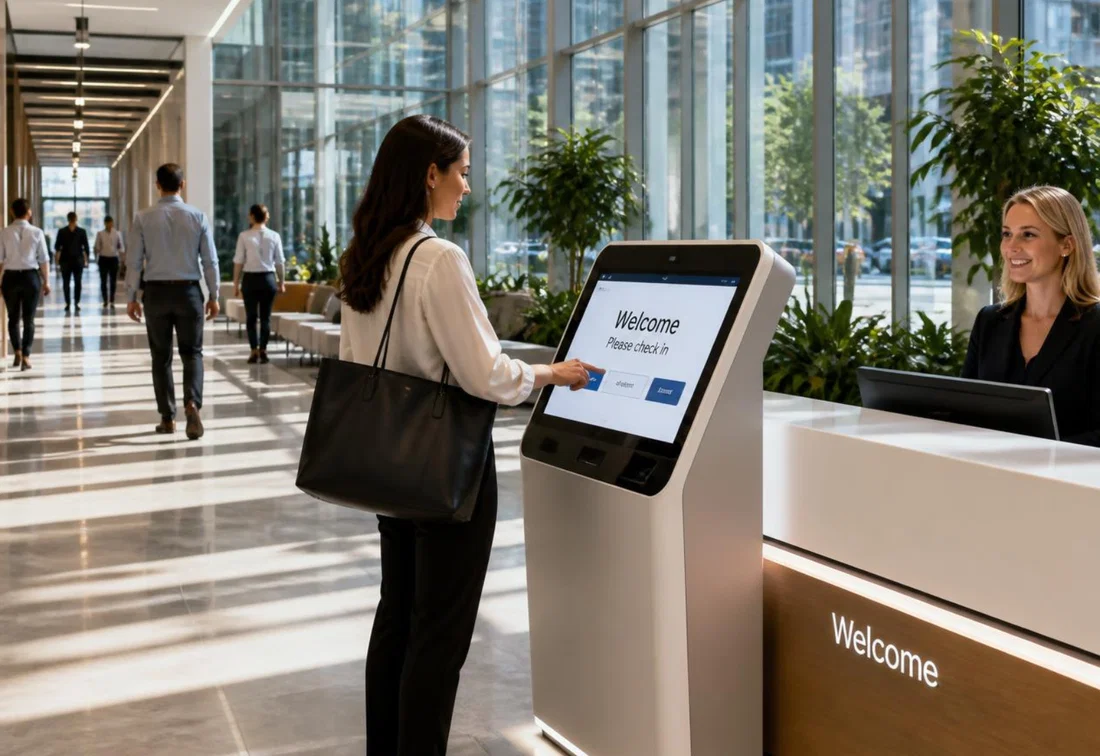
There is nothing more frustrating for a visitor than walking into a company’s reception area, finding no one there and not knowing what to do. Unfortunately, this happens more often than you might think. And plenty more can go wrong when welcoming visitors: long queues at check-in, a receptionist overwhelmed by stress or a guest getting lost in the building.
These examples show why a good visitor management strategy is so important. A successful approach combines a welcoming experience with security. A smooth check-in process, reliable access control and a solid plan for emergencies are crucial elements to make every visit professional, safe and pleasant.
A visitor management strategy is a well-thought-out approach to organizing visitor flows in your organization in a safe, efficient and welcoming way. It defines how visitors are announced, registered, guided, monitored and checked out, from invitation to departure.
Apply these practical tips to build a successful visitor management strategy in your company:
More and more companies today opt for a fully or partially digital reception. Digital systems for visitor registration and management are now well established. They ensure a smoother welcome, improve the visitor experience and increase security at the same time.
Good visitor management starts with clear processes: who announces visitors, which data is requested, who gets access to which zones and how is it verified that someone has left the building? A digital visitor management system, also known as a VMS, helps to apply those processes consistently.
A VMS automatically applies the guidelines in your visitor policy. This prevents a separate approach per receptionist, per visitor or per location. The reception runs the same way everywhere, according to your policy.
For visitors, a VMS means:
For employees, a VMS means:

A job candidate needs more guidance than a regular customer. A technician coming to install a coffee machine should not have to sign the same documents as a partner who gets access to confidential information.
Adapt your visitor flow, registration requirements and security measures based on who is visiting. Not every visitor carries the same risks or access rights.
With a digital visitor registration system, you can easily add rules for different visitor types. For customers and partners, for example, you can focus on a fast, smooth VIP experience and integration with meeting rooms. Contractors and suppliers, on the other hand, can be required to go through safety instructions, insurance checks or specific access procedures before they get access to the building.
Possible visitor types include: customers, suppliers, job candidates, contractors, consultants, partners, auditors, temporary employees and maintenance technicians. By defining clear processes per category, you avoid confusion at the reception desk and increase both security and the quality of the welcome.
A good visitor policy is crucial for security within your organization. Everything stands or falls with proper screening, clear access rules and reliable monitoring of who is in the building.
Some practical measures:

A fire, a workplace accident, an evacuation… In emergencies, a solid plan can save lives. So take emergency preparedness seriously.
An important part of that is knowing who is in the building at any given moment. Not only employees, but also visitors, suppliers, contractors and temporary workers must be quickly located or evacuated in an emergency.
A good visitor registration system automatically provides a real-time overview of everyone present during an incident. That is crucial for headcounts during evacuations and for communication with emergency services.
In addition, you can link visitor data to safety protocols. The system can then automatically send notifications with instructions, assembly points or other emergency procedures. After an incident, accurate registration also helps to verify who was present and which actions were taken.
Read also: Visitor Management Systems and Emergency Preparedness: A Comprehensive Guide
In many parts of the world, privacy laws are in place to protect visitors’ personal data. Think of the General Data Protection Regulation (GDPR) in the EU, or local regulations in the US, such as the California Consumer Privacy Act (CCPA) and the Stop Hacks and Improve Electronic Data Security (SHIELD) Act in New York.
Set clear rules about how long visitor data is kept and under which conditions. Besides complying with regulations, keeping visitor data encrypted and private ensures that visitors keep their trust in your organization.
A digital visitor management system offers a solution here as well. It ensures that personal data does not lie around at the reception desk, that guests are informed about the procedure right away during registration and that data is automatically deleted after the legal retention period.
Read also: GDPR and Visitor Management: A Practical Guide
A pleasant visitor experience sets the tone for a productive meeting. From preparation to departure, this is how you make your guests feel welcome:
Communication before arrival makes everything much clearer for the visitor. By sending your guests information in advance about parking, access or check-in requirements, you avoid confusion and delays. A well-informed visitor feels prepared and welcome, and arrives relaxed for the appointment.
Make sure your building, the front desk and any information materials are easily accessible and that the check-in process runs smoothly and clearly. Use digital displays and clear physical signage to guide guests to elevators, meeting rooms or break areas.
The reception area is your organization’s calling card. A fresh design and a clean, calm environment contribute to a positive experience for your visitors.
Show that you care about your guests by offering them simple refreshments (coffee, tea, water) on arrival. This puts visitors at ease and makes a good first impression.
No matter how well your visitor policy is designed, it is of little use if you do not train your staff to apply it.
Reception staff must be trained to guide visitors correctly, carry out identity checks efficiently and welcome unexpected guests with confidence. Security staff must know how to verify access rights, monitor visitor flows and respond correctly to incidents or emergencies. And all employees who invite guests must learn to work with the systems provided, so they can preregister visitors correctly, pass on the right information and welcome their guests on time.
By offering your employees sufficient training, you ensure that all systems are adopted smoothly and the guest experience becomes even better. That way, there is always someone available to make your visitors feel welcome, answer questions or handle unexpected situations.
Insight into visitor behavior is essential to build a good visitor management strategy. Visitor logs are a great help here; they contain a wealth of information that can help you improve efficiency, security and the visitor experience.
A digital visitor management system helps to process all available data into charts and trends. What are the peak moments, for example? How long does check-in take? What is the average waiting time? And how quickly are incidents resolved?
With these insights, you can fine-tune staff schedules, improve work processes at the reception desk and optimize your access control systems. Managing visitor data centrally also makes it easier to create reports for management or auditors.
Direct feedback from visitors also provides valuable information. After the visit, your VMS can automatically send a follow-up email to ask about the visitor experience. You could opt for a short survey the visitor can fill in at a convenient moment, for example. You can then use that information to identify areas for improvement.
A visitor policy is the what and the why: the written rules and procedures that determine who may enter your organization and what the security requirements are.
A visitor management strategy is the how: the long-term approach and the resources, such as software, to put that policy into practice efficiently.
In concrete terms, a visitor management strategy is a set of guidelines and processes to manage the flow of visitors in your organization. Most strategies focus on registering visitors on arrival and guiding them during their visit. They define how visitors are announced, registered, welcomed, guided and checked out. This not only ensures a smoother visitor experience but also increases security in your buildings.
For organizations with heavy visitor traffic, such a strategy becomes even more important. A good strategy can then help improve operational processes, such as deliveries, appointments with executives, contractor visits and access to secured zones.
An effective visitor management strategy always takes the specific situation of your organization into account. The layout of your building, the number of visitors, the available staff, the access control, the security risks and the systems in use all play a role.
That is why security, facility and reception teams often work together on drawing up these guidelines. The result is an approach that strikes the right balance between security, efficiency and a welcoming visitor experience.
A clear visitor management strategy prevents the reception of visitors from being left to chance. Without fixed agreements, queues, misunderstandings at the reception desk or security risks in the building arise more quickly.
With a good strategy, everyone knows what needs to happen: from preregistration and check-in to access control, escorting and check-out. This way, you welcome visitors professionally, keep better track of who is present and are better prepared for emergencies.
Moreover, a well-thought-out approach ensures a consistent visitor experience across all your locations. Visitors feel welcome, employees know their role and your organization keeps running safely and efficiently.
A successful visitor management strategy combines hospitality, security and efficiency. By defining clear processes for registration, access control, emergencies and data protection, you ensure that every visit runs smoothly and professionally.
With the right tools and well-trained staff, you keep better track of who is present, reduce the pressure on the reception desk and offer visitors a pleasant experience from arrival to departure.
Ready to put your visitor management strategy into practice? Try Vizito now with a free 14-day trial and discover how easy it is to welcome visitors smoothly and securely.
Did this help?
Make Vizito a preferred source on Google and our articles turn up more often for you in Search and in Discover. Google's preferences page opens in a new tab, so you keep your place here.
Make Vizito a preferred source Hosted in Europe
 ISO 27001 Certified
 GDPR compliant
 249+ reviews
 No credit card required
Our chat could not load
A content blocker or privacy extension is blocking client.crisp.chat, the service that runs our chat. Allow that address and try again, or reach us another way.
Contact us instead