Feb 24, 2026
Business Case for Visitor Management: How to Calculate ROI and Get Budget Approval
In this article, we discuss the duties and responsibilities of a receptionist in a modern company. Discover how to excel with our tips on visitor management, communication, and more.
Written by Jill, Content Manager - Written: January 14, 2026 - Last updated: March 16, 2026

A receptionist’s core duties in 2026 include greeting visitors with digital check-in systems, answering and routing calls, processing mail, managing appointments and meeting rooms, performing administrative tasks, maintaining the reception area, and helping monitor safety and GDPR compliance. Digitization has shifted the role from manual paperwork to coordination and hospitality, with tools like visitor management systems handling pre-registration, badge printing, and automatic host notifications.
In this article we discuss:
A receptionist, also known as a front desk officer, works in the reception area of a company or organization. They are the primary point of contact for visitors, customers, and suppliers, whether in person or over the phone. Their duties include receiving and registering visitors, answering phones and emails, managing appointments and access to the building, and keeping the reception area organized. These tasks are largely digital, involving systems for visitor management, access control, room management, and linked calendars.
Receptionists work in almost all sectors. According to the U.S. Bureau of Labor Statistics, a significant percentage of receptionists work in healthcare and social services (45%). Followed by professional, scientific, and technical services (11%); personal services (7%); religious, philanthropic, and social and professional organizations (4%); and administrative and support services (3%).
In recent years, the role of receptionists has shifted significantly from being executive and paper-driven to being more coordinating and digital:
Are you curious about which skills make a difference at the front desk? In this article, we list the most important receptionist skills.
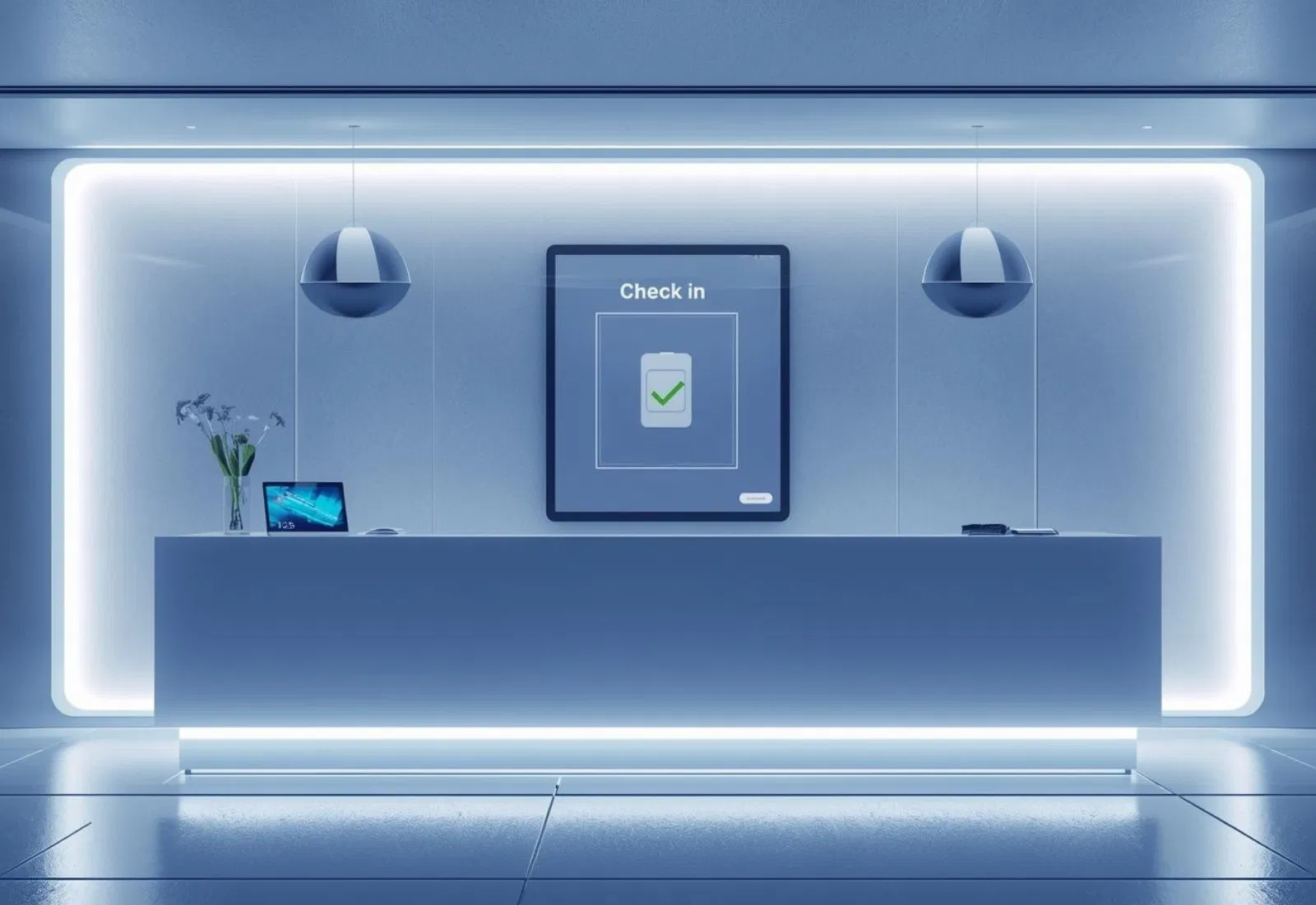
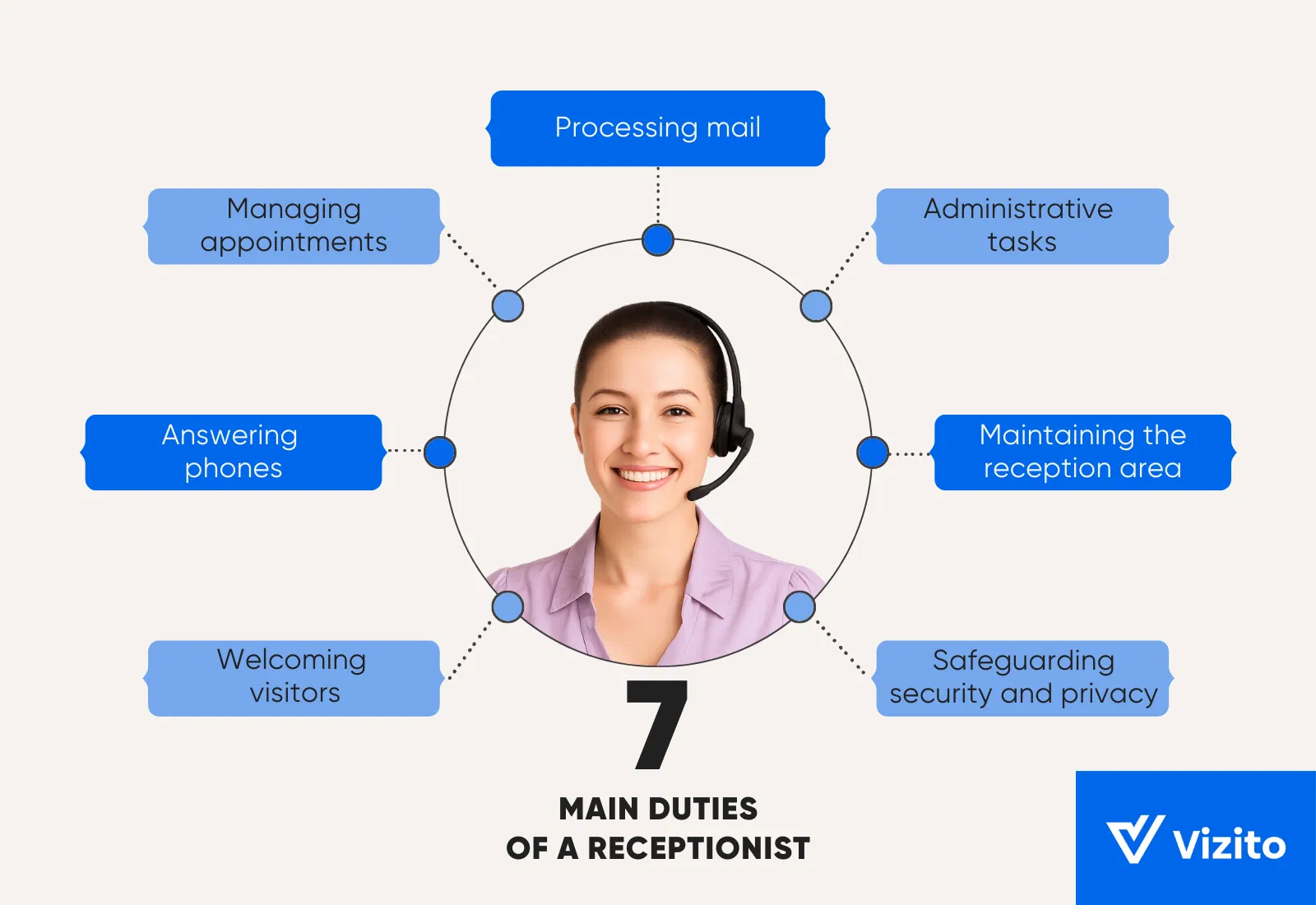
The specific responsibilities of receptionists vary depending on the employer. Generally, these are the main reception duties:
As a receptionist, it’s your responsibility to welcome visitors. The way this is done has changed dramatically in recent years.
In the past, welcoming a guest was a time-consuming task. Visitors had to register on paper, appointments had to be checked, and necessary documents had to be printed for signing. Then, a badge had to be printed manually, and the host had to be notified. Finally, the visitor was directed to his or her destination or escorted to the waiting room.
Now, all of this is done digitally. Visitors can register in advance via a digital invitation and check in quickly and easily upon arrival via a digital kiosk. Any documents, such as confidentiality agreements or safety regulations, can be signed digitally. A visitor pass is printed automatically, and the host is immediately notified that their visitor has arrived.
This frees up valuable time for receptionists, who can now focus on providing a warm welcome, answering questions, helping visitors find the right route, and explaining house rules.
The phone at the front desk rings constantly, and it is the receptionist’s job to answer those calls, take messages, and transfer them to the appropriate person.
This can be stressful, especially when multiple lines are ringing at once or visitors at the desk demand attention. A good receptionist stays calm and professional while quickly identifying the core of the issue and setting clear priorities. Working in a structured manner (for example, taking short notes, following fixed transfer procedures, and scheduling clear callback appointments when someone is unavailable) helps callers quickly and ensures no information is lost.
The reception desk is where mail and deliveries are received. The receptionist is responsible for receiving, registering, sorting, and distributing everything.
Though it may seem simple, careful processing is necessary to prevent important documents or packages from getting lost or delayed. Therefore, the receptionist keeps track of incoming shipments and ensures they are stored safely until they are picked up or delivered internally.
In addition to receiving visitors, answering phones, and handling mail, receptionists usually have a host of other responsibilities. In many companies, receptionists are responsible for keeping the daily schedule on track. This includes planning and confirming appointments, managing calendars, and reserving meeting rooms.
These tasks require the use of digital calendars, reservation systems, planning software, and digital visitor registration systems. Pre-registered visitors receive instructions and a QR code automatically, which helps prevent congestion in the lobby. Hosts receive an immediate notification when their guest arrives, ensuring that meetings start on time.
Receptionists support various back-office tasks, including updating visitor or supplier data, making copies, archiving documents, maintaining paper and electronic files, and managing office supplies.
Though these tasks may seem minor, they contribute to the organization’s structure and continuity. Receptionists work accurately and discreetly, follow internal procedures, and proactively alert others when information is missing or supplies are running low.
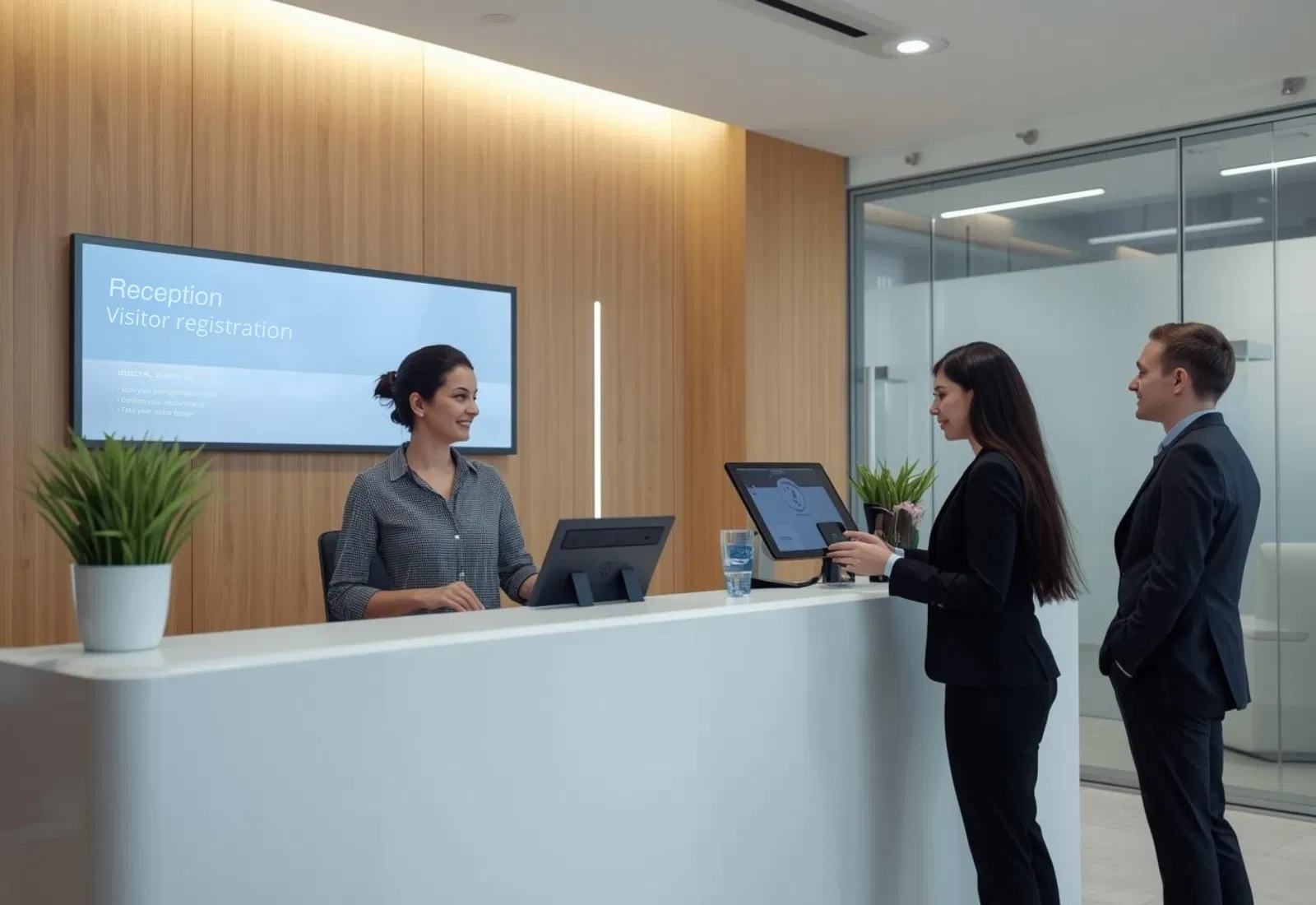
The reception area is the calling card of your company and reflects your brand. Keep it clean, comfortable, and accessible. Essential elements include clear signage, seating, visible safety instructions, and an organized reception desk. The receptionist ensures that the reception area remains tidy and neat all day long.
For practical ideas about layout, lighting, and signs, read our post about improving your reception area.
Finally, receptionists play an important role in an organization’s security and privacy policies. Located at the entrance, they help monitor access control by registering visitors, granting temporary access via badges or guest Wi-Fi and parking passes, and ensuring that access rights are time-limited and approved.
Additionally, they process visitor data in accordance with GDPR rules, performing additional checks such as ID verification in sensitive environments. It is important that only the necessary data is collected and stored correctly and that it is retained for no longer than necessary. In the event of an incident, receptionists play a crucial role by helping to initiate procedures, coordinating with security, and providing support with attendance lists.
Digital systems make all these processes easier and more secure. Linking visitor registration to access control means authorized visitors automatically receive the correct access or Wi-Fi code. A visitor management system helps ensure GDPR compliance, including secure cloud-based data storage and automatic retention periods. Additionally, a real-time visitor list is always available for evacuation purposes.
The role of a receptionist should not be underestimated. A receptionist is more than just a friendly face; they are often the first person outsiders meet from your company. Therefore, receptionists play a key role in:
For inspiration on what a reception area needs today, read this overview of 10 essential features for a modern front desk.
Many stimuli at once - Receptionists must constantly switch between the desk, telephone, email, and suppliers. Clear procedures and digital tools that automate routine tasks help maintain an overview.
Peak time pressure - Queues form at the counter and on the phone. Encouraging pre-registration and using a self-service kiosk makes check-in faster and keeps the reception area manageable.
Difficult or tense situations - Dissatisfied customers, stressful conversations, or inappropriate behavior. Clear communication, short waiting times, and a warm welcome prevent many issues.
Language and cultural differences - International visitors speak different languages and have different expectations. Digital visitor registration allows you to offer check-in in multiple languages while providing personal support as needed.
Emotional strain - Constant visibility, frequent task switching, and last-minute changes create strain. Feasible planning, sufficient backup during breaks, and systems that minimize repetitive tasks help lower the workload.

Be friendly and proactive, but don’t be afraid to enforce the rules consistently. Inform visitors about the registration requirements and house rules. Being professional at the reception desk means communicating clearly and assertively, as well as having the courage to say “no.”
During peak times phones ring, visitors arrive, deliveries are made, and questions are asked all at once. The best receptionists work with set routines and prioritize. Turn recurring situations into a standard process. By determining in advance which tasks always take priority, you can switch gears faster and avoid mistakes when things get busy.
Digital tools help receptionists save time and avoid mistakes. It is smart to automate where possible: digital visitor registration with pre-registration and automatic host notifications, meeting room reservations, automatic access control. As a receptionist, it is important to master these tools.
Handle visitor data consciously and discreetly. Only collect what is necessary, never share information with unauthorized persons, and strictly follow the procedures surrounding confidentiality agreements, identity checks, and visitor badges. This way, you can ensure security while keeping the reception personal and professional.
Strong communication, stress resistance, and digital skills are essential for the modern receptionist. Keep training these skills consciously and practice them in real life. Small habits help: stay calm under pressure, communicate clearly and concisely, take notes during conversations, and ask for help in time when things get busy or incidents occur.
Vizito automates a large part of visitor management, enabling reception to work faster, more efficiently, and more securely.
The role of a receptionist should not be underestimated. As the face of your company, the receptionist supports daily operations by welcoming visitors professionally, managing phone calls and communications, coordinating appointments and meeting rooms, and performing administrative tasks. The reception desk is also an important part of your organization’s security system.
In 2026, the most effective reception desks will combine warm, human service with smart digital tools. This ensures a smooth, personal visitor experience while making behind-the-scenes processes more efficient and secure.
Would you like to experience for yourself how digital visitor management can make a difference? Try out Vizito during a 14-day trial. Chat with us or book a demo to learn how Vizito can improve your reception area.
Sign up in seconds - no credit card required.
Continue with Microsoft Continue with Google